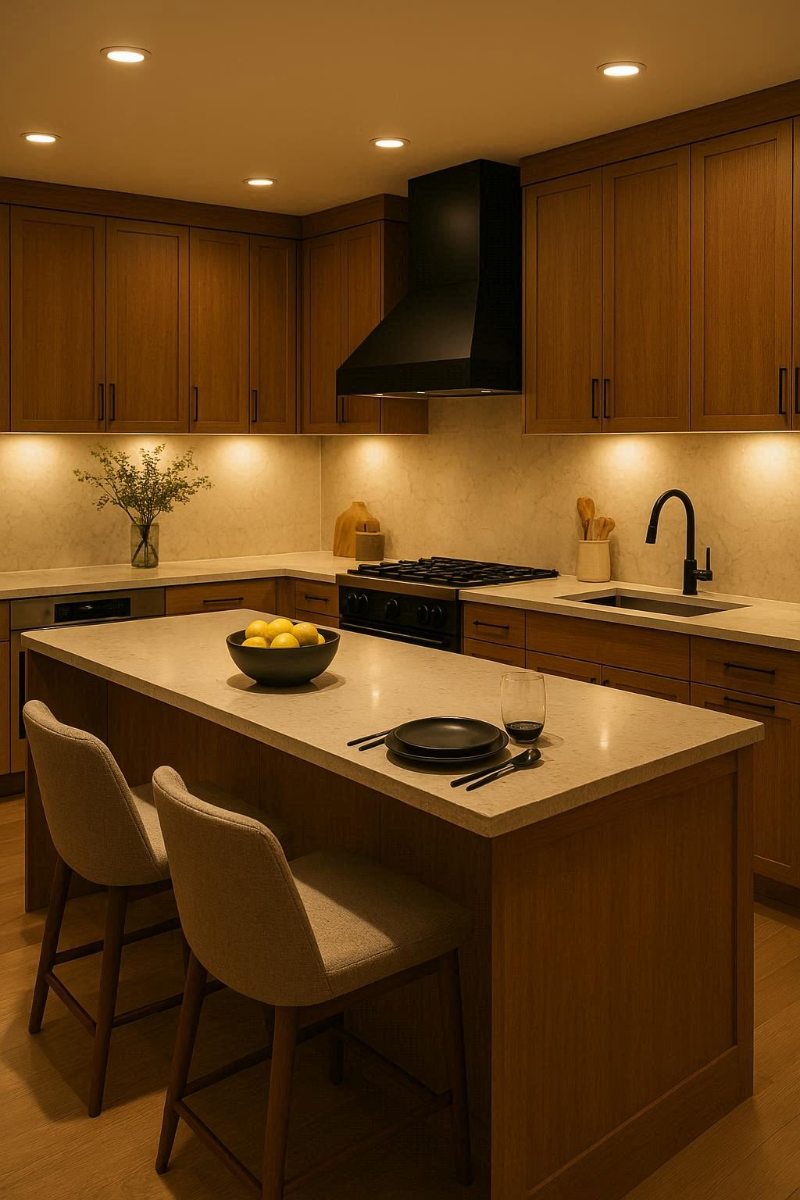
Lighting plays an incredibly important role in any room, but in the kitchen, it becomes even more vital. Not only does lighting serve a functional purpose, like illuminating countertops and workspaces, but it can also set the tone for the entire room. If you’ve ever walked into a kitchen and felt immediately drawn to its warmth and sophistication, chances are, good lighting had something to do with it. One of the most popular and effective types of lighting used in modern kitchens is can lighting (also known as recessed lighting). In this blog post, we’re going to explore how the right placement of can lights can bring a touch of elegance to your kitchen while boosting its functionality.
What Is Can Light Placement in Kitchen?
Before diving into how light placement can enhance your kitchen’s elegance, let’s first break down what lighting actually is and why it has become such a staple in Dining Essentials and Elegant Home Décor modern kitchen designs.
Definition of Can Lighting
Can lights are a type of recessed lighting, meaning the light fixture is installed into a hollow opening in the ceiling, so only the trim and the light bulb are visible. This design allows for a sleek, clean look that doesn’t take up any space or protrude from the ceiling. The subtlety of can lights makes them perfect for kitchens where aesthetics and function need to come together seamlessly.
Why Can Lights Are Popular in Modern Kitchens
Can lights are a popular choice for kitchens for several reasons:
- Space-saving: Can lights are ideal for kitchens with lower ceilings or those looking to avoid bulky light fixtures hanging down.
- Minimalist appeal: The unobtrusive design aligns with modern minimalist trends, providing functional illumination without compromising the kitchen’s style.
- Versatility: Can lights can be directed toward specific areas, giving you control over the light’s focus, whether you want to highlight a certain feature or flood the space with uniform light.
How Can Light Placement Adds Elegance to Your Kitchen
Now that we know what lighting is, let’s take a closer look at how strategic light placement can elevate the elegance of your kitchen.
Creating Soft, Ambient Lighting
One of the key elements in creating an elegant kitchen is ambient lighting. Can lights, when placed thoughtfully, can contribute to a soft, overall illumination that bathes the entire kitchen in a cozy glow. This ambient lighting helps to avoid harsh shadows or overly bright spots, resulting in a more inviting and serene space.
Example: Imagine hosting a dinner party in your kitchen. The soft glow from carefully placed can lights provides just the right amount of light for the conversation to flow without being too bright or glaring.
Additionally, dimmable can lights can be a game-changer. You can adjust the brightness to match the mood of the moment—whether you want bright, task-oriented light for cooking or a dim, relaxed atmosphere for family time. The ability to control lighting intensity is essential in creating an atmosphere that’s both practical and beautiful.
Highlighting Kitchen Features with Precision
Proper can light placement also allows you to highlight specific features of your kitchen, adding to its overall elegance. For example, strategically positioning can lights above your kitchen island or over your countertops can draw attention to those areas, making them stand out.
Example: Think of a gorgeous marble backsplash or a stunning range hood. By placing can lights overhead, you can emphasize these features, allowing them to become focal points in your kitchen, adding drama and elegance to the space.
The precision of can light placement lets you create a play of light and shadows that adds depth and sophistication to your kitchen.
Complementing Your Kitchen’s Style
Another way can light placement adds elegance is by complementing your kitchen’s overall style. Whether your kitchen is modern, rustic, or traditional, well-positioned can lights can harmonize with other design elements such as cabinetry, flooring, and appliances.
For instance:
- Modern kitchens benefit from can lights placed in a symmetrical, uniform grid pattern for a clean, sleek look.
- Rustic kitchens may prefer the warmth of a few well-placed can lights that softly illuminate the wood elements and earthy textures.
- Traditional kitchens often combine recessed can lights with decorative chandeliers or pendant lights, ensuring the kitchen feels both cozy and well-lit.
Tips for Perfect Can Light Placement in Your Kitchen
Achieving an elegant kitchen through can light placement requires a little planning. Here are some essential tips for getting it just right.
How to Position Can Lights for Maximum Effect
When it comes to positioning can lights, the goal is to ensure even, balanced lighting without dark spots or overwhelming brightness.
Spacing: Typically, you want to space your can lights about 4-6 feet apart, but this will depend on the size of the room and the intensity of light needed. For larger kitchens, more space between each light may be necessary to maintain an even glow.
Distance from walls: Can lights should generally be placed 2-3 feet from the wall to avoid shadows while still lighting up the space efficiently.
Optimal Placement for Different Kitchen Zones
Every area in your kitchen has different lighting needs, and can lights can be positioned to meet these needs effectively.
- Cooking Areas: Over your stove or range, position can lights to provide bright, direct lighting. You want to ensure you have plenty of light for food prep and cooking tasks.
- Kitchen Islands: Can lights should be spaced evenly above the island (24-30 inches above the countertop) to provide adequate task lighting for chopping vegetables or reading recipes.
- Sinks and Prep Areas: Task lighting is essential here. Position can lights directly above the sink and prep spaces to ensure you have enough light to wash dishes and prepare meals.
Balancing Natural and Artificial Lighting
One of the most important aspects of kitchen lighting is balancing artificial lighting with the natural light coming from windows. Can lights should be positioned in such a way that they complement the amount of daylight your kitchen receives.
Tip: If your kitchen gets plenty of natural light in the morning, opt for a softer placement of can lights in the evening when the daylight dims. If your kitchen doesn’t have many windows, you may want to place more can lights to compensate for the lack of natural light.
Common Mistakes to Avoid When Installing Can Lights
Installing can lights isn’t always as straightforward as it seems. Here are some common mistakes that can detract from your kitchen’s elegance:
Too Much Overhead Lighting
While you may think more lights mean brighter and better, too many overhead can lights can overwhelm the space. Instead of flooding your kitchen with excessive light, balance your lighting with a mix of ambient, task, and accent lighting.
Incorrect Spacing of Can Lights
Placing can lights too close together or too far apart can lead to uneven lighting. It’s important to plan your light spacing carefully to ensure a smooth, consistent lighting effect across your kitchen.
Ignoring Kitchen Layout and Design
The layout of your kitchen plays a huge role in lighting placement. Misaligning the lights with the kitchen’s workflow and design can make the space feel cluttered and less cohesive. Be sure to plan your lighting layout according to the kitchen’s traffic areas and functional zones.
The Impact of Proper Can Light Placement on Kitchen Functionality
Good lighting not only enhances the appearance of your kitchen, but it also boosts its functionality. Properly placed can lights improve visibility for cooking and prep work, ensuring a safer and more comfortable environment.
Improving Task Visibility
When placed above cooking areas, sinks, and workstations, can lights can make your kitchen more functional by ensuring that you can see clearly while preparing meals. This makes cooking safer and more efficient.
Creating a Harmonious Kitchen Atmosphere
Lighting significantly influences the mood of your kitchen. Soft, even lighting from well-placed can lights can help create a calming, welcoming atmosphere that’s perfect for family gatherings, cooking, and even casual entertaining.
Trending Styles for Can Light Placement in Modern Kitchens
With new trends constantly emerging, can light placement continue to evolve? Here are two current trends in kitchen lighting:
Minimalist and Sleek Designs
The rise of minimalist design has made can lights an ideal choice. With their simple, understated appearance, they blend seamlessly into a sleek and modern kitchen. In contemporary kitchens, can lights often take center stage for their clean, crisp design.
Example: A modern kitchen with white cabinetry, stainless steel appliances, and recessed can lights for clean, even lighting creates a minimalist aesthetic that feels both spacious and sophisticated.
Layered Lighting
Another popular trend is the use of layered lighting, where can lights are combined with other light fixtures such as pendant lights, under-cabinet lighting, or wall sconces. Layering your lighting creates a dynamic, well-rounded atmosphere in your kitchen, with different types of light serving both functional and decorative purposes.
How to Choose the Right Can Lights for Your Kitchen
When selecting can lights, there are a few key considerations to keep in mind:
Selecting the Right Size and Style of Can Lights
The size and style of your can lights should complement your kitchen’s design. Larger kitchens may require larger can lights, while smaller kitchens should use smaller fixtures to avoid overwhelming the space.
Energy Efficiency and Smart Features
Opt for energy-efficient LED can lights to reduce electricity consumption. Additionally, consider integrating smart lighting features so you can control the lighting remotely, or adjust the brightness and color temperature to suit your needs.
FAQ
Q: How far apart should can lights be placed in a kitchen?
- The general rule is to space them about 4-6 feet apart, depending on the room’s size and the desired lighting intensity.
Q: Can I use can lights for both ambient and task lighting in my kitchen?
- Yes! Can lights are versatile and can be used for both, depending on how they are positioned.
Q: What’s the best placement for can lights over a kitchen island?
- Can lights should be placed 24-30 inches above the countertop and spaced evenly for uniform light distribution.
Q: Are can lights suitable for kitchens with low ceilings?
- Yes! Can lights are ideal for kitchens with low ceilings because they don’t hang down and create a sleek, modern look.
Q: How can I combine can lights with other lighting to enhance elegance?
- Layering can lights with pendant lights, under-cabinet lights, and wall sconces creates a balanced and elegant lighting scheme.
Conclusion
Can light placement is more than just a functional aspect of kitchen design—it’s a powerful tool to create elegance and atmosphere in the heart of your home. From providing soft, ambient lighting to highlighting key features and complementing your style, the right can light placement can truly transform your kitchen. By considering these tips, trends, and common mistakes, you can design a kitchen that’s both beautiful and functional, ensuring that your kitchen is a place you’ll love to spend time in for years to come.