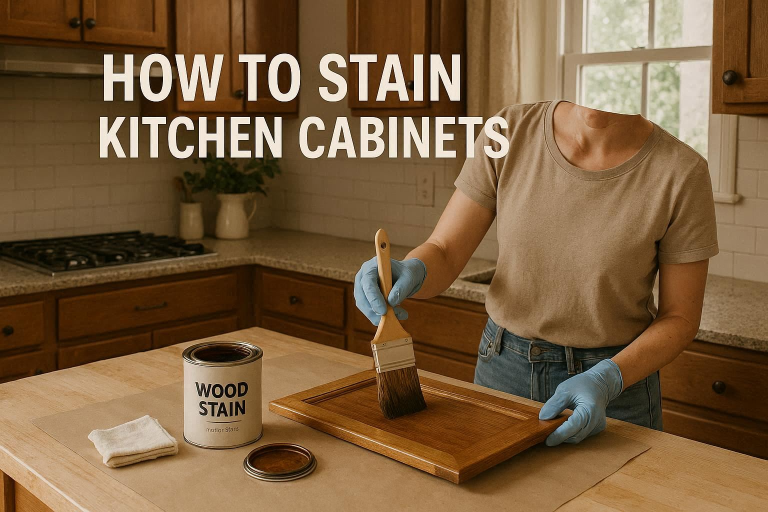
If your kitchen cabinets are looking dull, outdated, or simply don’t match your style anymore, you don’t need to commit to a full, expensive remodel. A fresh coat of stain is an incredibly impactful and budget-friendly way to completely revitalize your entire kitchen space.
Staining your kitchen cabinets might seem like a daunting project, but with the right preparation and a systematic approach, it is a highly rewarding DIY task you can complete in a single weekend.
This comprehensive guide will walk you through every step of the process, ensuring you get a beautiful, professional-looking, and long-lasting finish that will make your kitchen feel brand new.
Understanding the Task: Why Stain Your Cabinets?
Staining offers a major advantage over painting: it enhances the natural wood grain and texture, allowing the character of the wood to shine through.
It’s the perfect choice if you have quality wooden cabinets (like oak, maple, or cherry) and prefer a warm, traditional, or rustic aesthetic. Stained cabinets are also highly durable and easier to touch up minor scratches on compared to painted surfaces.
The goal of this project is to apply a new color while maintaining the authentic, deep texture that only real wood provides.
Stain Selection: Choosing the Right Product for Your Kitchen
The success of your project starts with selecting the right product. The best type of stain depends on your cabinet’s current finish, the wood type, and your desired final look.
Gel Stain vs. Oil-Based vs. Water-Based Stains
| Stain Type | Best For | Pros | Cons |
| Oil-Based Stain | Unfinished or stripped wood (deep penetration). | Rich, deep colors; high durability; easy to work with (slow dry time). | Strong odor; long dry/cure time; requires mineral spirits for cleanup. |
| Gel Stain | Difficult woods (pine, maple) or staining over old finishes. | Excellent for preventing blotchiness; non-drip (great for vertical surfaces); adheres well without stripping. | Sits on the surface (less natural wood look); slightly less durable finish. |
| Water-Based Stain | A quick project with low fumes. | Low odor; fast drying time; easy cleanup with soap and water; modern, lighter finishes. | Can raise the wood grain, requiring extra sanding; less deep color penetration. |
For most DIY cabinet staining projects, especially if you have a variety of wood types or want to avoid extensive stripping, a gel stain is often the easiest and most forgiving choice.
Staining Over an Existing Finish (Refinishing)
If your cabinets are already stained but you want a darker color, you might not need to strip them completely to bare wood.
-
Darkening: You can often use a gel stain or a combination stain-and-polyurethane product (like Minwax PolyShades) to go darker. This coats the surface rather than soaking in, creating a rich new layer.
-
Preparation: Even if you aren’t stripping, you must thoroughly clean and lightly scuff-sand the existing finish with 180-220 grit sandpaper to ensure the new stain has something to adhere to.
Selecting the Best Top Coat: Polyurethane and Varnish
A top coat is mandatory for kitchen cabinets, as it seals the stain and protects the wood from moisture, grease, and daily wear.
-
Polyurethane: The most common choice. Comes in oil-based (very tough, more yellowing) and water-based (dries fast, less odor, clear finish).
-
Varnish: Extremely durable and resistant to heat and chemicals, making it ideal for the high-traffic kitchen environment.
Always choose a top coat with a compatible base (e.g., oil-based polyurethane for an oil-based stain) unless specifically instructed otherwise by the manufacturer.
Phase 1: Essential Preparation (The Key to Success)
Rushing the prep work is the number one reason staining Maximizing Kitchen Space projects fail. Dedicate a significant amount of time to this phase—it’s crucial for a flawless result.
Removing and Labeling Doors, Drawers, and Hardware
You cannot achieve a professional finish with the doors still attached.
-
Remove everything: Doors, drawer fronts, and all hinges, knobs, and pulls.
-
Labeling is key: Use masking tape to number each door and the corresponding spot on the cabinet frame (e.g., “U1” for Upper Cabinet 1, “D3” for Drawer 3).
-
Store hardware: Place the screws and hinges for each door/drawer in a small, labeled plastic bag. This prevents losing small parts and ensures they go back exactly where they came from.
Setting Up Your Workspace and Ventilation
Staining products emit fumes, and you need a clean environment for drying.
-
Choose an area: A garage, basement, or well-ventilated spare room is ideal.
-
Protection: Lay down plastic sheeting or canvas drop cloths to protect your floor and countertops.
-
Airflow: Open windows and use fans to create a cross-breeze. Do not point fans directly at your drying pieces, as this can cause uneven drying and dust settling.
Deep Cleaning and Degreasing Cabinets (The TSP Method)
Kitchen cabinets accumulate years of cooking grease and grime that must be removed completely for the stain to penetrate evenly.
-
Use a Degreaser: A solution of Trisodium Phosphate (TSP) is highly effective. Alternatively, a strong solution of dish soap and warm water can work for lighter grease.
-
Application: Apply the solution with a clean cloth or sponge, scrubbing the surfaces, especially near handles and stove areas.
-
Rinse and Dry: Wipe down all surfaces with a cloth dampened with clean water to remove any chemical residue. Allow the cabinets to dry completely before proceeding.
Phase 2: Surface Preparation (Creating the Perfect Canvas)
The texture of your wood will determine how the stain looks. Proper How To Stain Unfinished Cabinets sanding opens the wood pores, allowing the stain to be absorbed evenly.
Sanding Techniques for Different Wood Types
The goal is not to remove all the old stain (unless you are completely changing the color), but to scuff the surface so the new stain can adhere.
-
Start Coarse, Finish Fine: If stripping to bare wood, start with 80-120 grit sandpaper. For most refinishing jobs, start with 150-grit.
-
Final Sanding: Always finish with a 220-grit sandpaper. This creates a smooth surface ready for a professional finish.
-
Always sand with the grain of the wood. Sanding across the grain leaves visible scratches that the stain will highlight.
-
Tools: Use a sanding block on flat surfaces and loose sandpaper for detailed edges and corners. A random orbital sander can speed up work on large, flat door panels.
When and How to Use a Wood Conditioner
Wood conditioner is a vital step, especially for “blotchy” woods like pine, birch, cherry, and maple.
-
Function: Conditioner is a pre-stain sealer that partially fills the wood’s pores, allowing the stain to absorb at an even rate instead of soaking into soft spots and becoming dark and splotchy.
-
Application: Brush or wipe on a thin, even coat of the appropriate conditioner (oil-based for oil stain, water-based for water stain).
-
Timing: Allow it to soak in for the time specified on the can (usually 5–15 minutes), wipe off the excess, and then apply the stain within the suggested window—often within two hours.
Final Prep: Tack Cloth and Dust Removal
Any dust left on the surface will mix with the stain, creating an ugly, gritty texture.
-
Vacuum: Use a shop vacuum with a brush attachment to remove most of the sanding dust.
-
Tack Cloth: Wipe down every surface with a tack cloth (a cheesecloth treated with a sticky resin). This picks up the finest dust particles.
-
Don’t Rush: Your surface should feel perfectly smooth and be 100% dust-free before you apply any product.
Phase 3: The Staining Process (Step-by-Step Application)
Now it’s time for the actual staining. Work systematically and maintain a “wet edge” to avoid visible lap marks.
Testing the Stain Color
This is a critical, non-negotiable step. The color on the can is never exactly the color on your wood.
-
Apply the stain to a small, inconspicuous area, like the back of one cabinet door or an unneeded piece of wood of the same type.
-
Apply the top coat over the test spot as well, as the sealer will often deepen or enrich the final color.
Applying the First Coat: Working with the Grain
Stir the stain well to mix the pigment. Never shake the can, as this creates bubbles.
-
Use a Quality Tool: Apply with a natural-bristle brush (for oil-based) or a foam brush/clean, lint-free cloth.
-
Apply Evenly: Brush the stain onto a manageable section, working with the grain. Ensure the wood is completely saturated.
-
Work in Sections: Focus on a small area (like a single door panel) at a time so you can control the soak time.
Wiping Off Excess and Achieving Color Depth
The color of the final result is determined by two factors: the stain color and the amount of time you let it soak in before wiping it off.
-
Wait: Let the stain penetrate for 5–15 minutes (or as directed by the manufacturer). Longer wait time = darker color.
-
Wipe: Use a clean, lint-free cloth to wipe off the excess stain, following the direction of the wood grain.
-
Feather Edges: Use a second, dry cloth to lightly “feather” the edges and smooth out any lines or puddles of excess stain.
Drying Time and Applying Additional Coats
-
Drying: Allow the first coat to dry completely, typically 12–24 hours. Check the manufacturer’s recommendation. It should not feel tacky, and the solvent smell should be minimal.
-
Second Coat: If the color is not dark enough, apply a second coat using the same technique. No sanding is needed between coats of traditional penetrating stain.
-
Warning: Applying too many coats will prevent the stain from penetrating, leading to a thick, gummy surface that will not dry properly.
Phase 4: Sealing and Finishing for Durability
This final step provides the long-term protection your kitchen cabinets require.
Applying the Protective Top Coat (Polyurethane/Varnish)
-
Clean: Lightly wipe the fully dry stained surface with a dry cloth to remove any dust.
-
Stir: Gently stir the top coat (do not shake) to mix the flattening agents.
-
Apply: Apply a thin, even coat with a high-quality brush, working in long, consistent strokes with the grain. Thin coats are much better than one thick coat.
Light Sanding Between Coats for a Flawless Finish
Once the first coat of top coat is completely dry (check the manufacturer’s directions), you need to smooth the surface.
-
Scuff Sand: Use a very fine abrasive, such as #000 or #0000 steel wool or 400-grit sandpaper, to lightly scuff the entire surface. This is called “de-nibbing” and removes tiny dust specks or air bubbles.
-
Clean: Wipe down the surface thoroughly with a tack cloth before applying the next coat.
-
Repeat: Apply 2–3 thin coats of the top coat for maximum protection.
Allowing Adequate Curing Time
Stains and top coats have a drying time (when you can handle it) and a curing time (when it reaches full hardness).
-
Don’t Rush: Wait a minimum of 24–48 hours after the final coat before reassembling.
-
Full Cure: The finish won’t reach full hardness for 7–30 days. Be gentle with your cabinets during this time and avoid harsh cleaners.
Phase 5: Reassembly and Final Touches
Refer to your labeling system to reattach the hinges, doors, and hardware.
-
Use Hand Tools: Avoid power tools when reattaching hinges and pulls to prevent stripping the wood or overtightening the screws.
-
New Hardware: If you purchased new knobs or pulls, now is the time to install them for an extra modern or personalized touch.
-
Adjust: You may need to slightly adjust the hinges to ensure the doors align perfectly and close smoothly.
Common Cabinet Staining Mistakes to Avoid
-
Skipping the Pre-Stain Conditioner: Leads to blotchy, uneven coloring, especially on softwoods. Always use it!
-
Sanding Against the Grain: Leaves noticeable scratches that will be permanently highlighted by the stain.
-
Not Wiping Off Excess Stain: The unabsorbed stain will dry sticky, tacky, and unevenly, making the surface difficult to seal and cure.
-
Shaking the Can: Introduces air bubbles that transfer to the wood surface, resulting in an unprofessional, cratered finish. Always stir gently.
-
Not Cleaning Thoroughly: Grease, wax, or residual cleaning agents will prevent the stain from adhering to the wood, resulting in patchiness and eventual peeling.
Pro Tips for a Professional-Looking Cabinet Stain
| Tip | Description |
| Use a Retarder | For fast-drying water-based stains, add a small amount of stain retarder to extend the working time and prevent lap marks. |
| Wipe with Natural Bristle Brush | Use a quality, soft natural-bristle brush (like a badger hair brush) to “tip-off” or lightly smooth the final coat of polyurethane, removing any brush marks. |
| Work Vertically (Frames) | When staining the fixed cabinet frames, tackle vertical stiles first, then the horizontal rails, always working with the grain to blend the overlaps. |
| Use Gel Stain for Vertical Surfaces | Gel stain’s thick consistency makes it perfect for the cabinet boxes, as it won’t run or drip down the vertical surfaces. |
FAQs
How long does it typically take to stain a full set of kitchen cabinets?
A complete project usually takes a long weekend (3-4 days). Day 1 is preparation (removal, cleaning, sanding). Day 2 is staining and drying. Day 3 is sealing (top coat). Day 4 is reassembly and final curing.
Do I need to remove all the old finish before staining?
Not always. If you are applying a darker stain or a gel stain over the top, a thorough cleaning and light scuff-sanding is sufficient. If you want a completely different or lighter color, you must strip the cabinets down to bare wood.
Can I use the same brush for both stain and polyurethane?
It is strongly recommended to use a different, clean brush for each product. The top coat should be kept pristine to prevent streak marks. Clean your brush between coats.
What is the best grit sandpaper to finish with?
You should finish your sanding with a 220-grit sandpaper before applying the stain. This creates the optimal surface texture for stain absorption and a smooth final feel.
How do I clean and maintain my newly stained cabinets?
Once fully cured (up to 30 days), use a mild solution of dish soap and warm water with a soft cloth. Avoid ammonia-based or harsh abrasive cleaners, as these can dull or damage the protective top coat.
Conclusion:
Staining your kitchen cabinets is a labor of love that results in one of the most satisfying transformations a DIYer can undertake. By focusing on meticulous preparation—the real secret of professional work—and following a systematic approach to application, you can achieve a stunning, high-end look without the high-end cost.
Your patience throughout the sanding, conditioning, and drying phases will be rewarded with a beautiful, durable finish that highlights the natural elegance of your wood. Step back, admire the rich color, and enjoy your completely refreshed, customized kitchen!