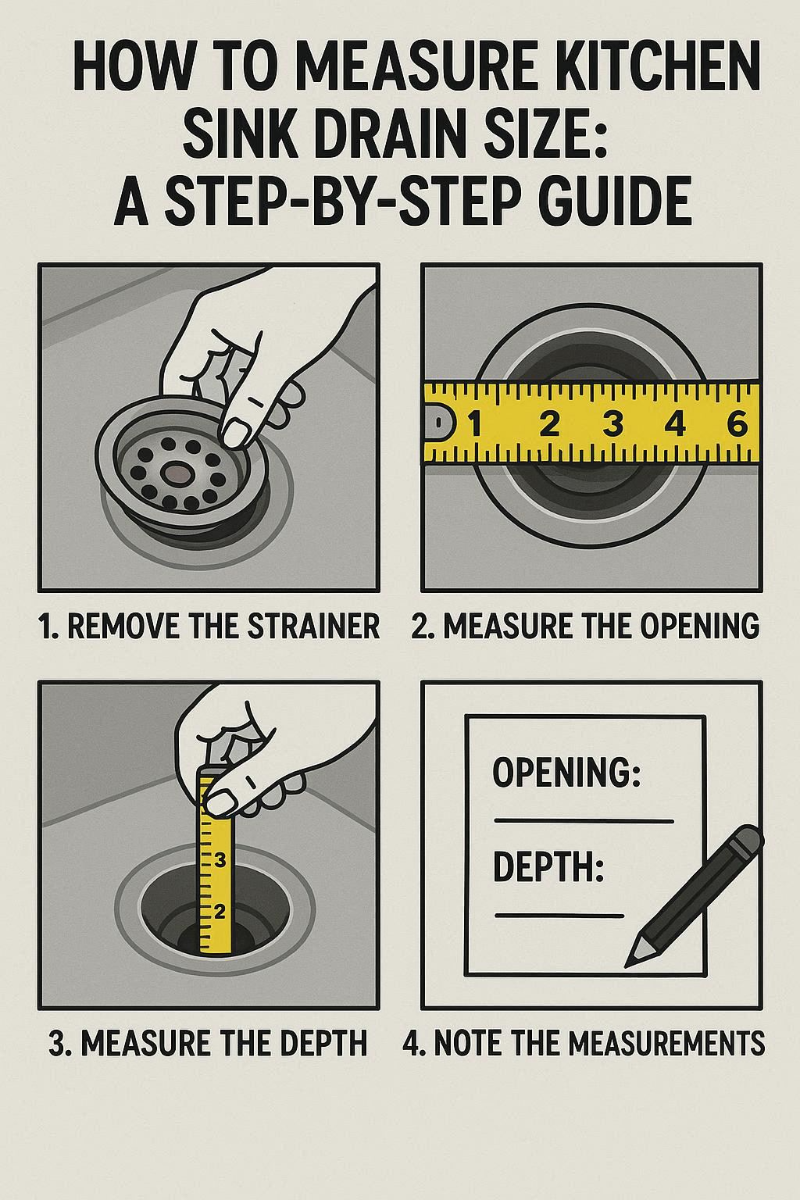
If you’re planning a kitchen renovation, replacing a sink, or dealing with a clogged drain, one thing you can’t overlook is the kitchen sink drain size. Properly measuring your sink’s drain size is essential for ensuring a smooth installation, avoiding leaks, and preventing plumbing headaches down the line.
In this guide, we’ll walk you through everything you need to know about measuring your kitchen sink drain size accurately. We’ll discuss the right tools to use, the steps to take, and how to select the correct fittings. Plus, we’ll explain why accurate measurements are so important and what common mistakes to avoid. Let’s dive in!
Why Accurate Drain Size Measurement is Important
Before we get into the nitty-gritty of measurements, let’s first talk about why getting this right is so crucial.
Prevent Leaks and Water Damage
One of the most common problems that result from improper drain measurements is leaks. A poor seal between the drainpipe and the sink can allow water to escape, causing damage to your cabinetry, flooring, and even your home’s foundation over time. When you Maximizing Kitchen Space measure the drain size accurately, you ensure that the drain fits snugly and the risk of leaks is minimized.
Avoid Plumbing Issues and Expenses
Imagine installing a drain only to discover later that it doesn’t fit properly or isn’t the right size. You’ll have to undo the work, spend more money on the right parts, and potentially hire a plumber to fix the issue. Accurate measurements help you avoid these costly plumbing repairs and the hassle of having to redo the job.
Tools You Will Need to Measure Kitchen Sink Drain Size
Now that you understand why it’s so important, let’s talk about the tools you’ll need to measure the drain size accurately.
Measuring Tape
The most important tool in your kit is a flexible measuring tape. Unlike a rigid ruler, a measuring tape can conform to the shape of your drainpipe, allowing for more accurate measurements. For best results, choose a tape with both inches and centimeters marked on it, depending on which measurement system you’re most comfortable using.
Pipe Wrench or Adjustable Pliers
In some cases, you may need to loosen the drain components before measuring them, especially if you’re working with an existing drain that’s been installed for a while. A pipe wrench or adjustable pliers is your go-to tool for this task. Make sure to be gentle when using these tools, as overtightening can cause damage.
Drain Plug or Stopper
A drain plug or stopper is also necessary to prevent any debris from falling into the drain while you’re measuring. This helps ensure that you get an accurate reading of the drain’s diameter without anything interfering.
How to Measure the Drain Pipe Size
Let’s break down the steps on how to measure your kitchen sink drain pipe size.
Measuring the Diameter of the Drain Hole
First, let’s focus on the sink itself. The drain hole at the bottom of your sink needs to be measured to ensure that it’s compatible with your drain pipe. Using your flexible measuring tape, carefully measure the diameter of the hole. If your sink is installed, be sure to measure from the edge of the hole to get an accurate reading. This size will dictate the drain size you need for the sink to function correctly.
Measuring the Drain Pipe Diameter
Once you’ve measured the sink’s drain hole, the next step is to measure the drainpipe itself. Take your measuring tape and wrap it around the outside of the pipe to get the outside diameter. This is crucial because the drain fitting must match this measurement for a proper seal. Don’t forget to check for any rough edges or deformities in the pipe that might affect the fit.
Identifying the Drainpipe Type
There are different types of pipes used for kitchen sink drainage. PVC (polyvinyl chloride) pipes are the most common, but you might also encounter metal pipes (like stainless steel or copper). Each type of pipe may have slightly different measurement methods, so be aware of the material you’re working with. PVC pipes, for example, are measured based on their outer diameter, while metal pipes may require more careful handling to avoid damaging them while measuring.
How to Measure the Drain Tailpiece and P-Trap
The tailpiece and P-trap are critical components in your kitchen sink drainage system. Here’s how to measure them properly:
Understanding the Tailpiece
The tailpiece is the section of the drainpipe that connects the sink drain to the rest of the plumbing. It typically extends down from the sink’s drain hole. To measure the tailpiece, use your measuring tape to determine its length. You’ll also need to check the diameter, as it should match the drainpipe size for a snug fit.
Measuring the P-Trap Size
The P-trap is the curved section of pipe that prevents sewer gases from entering your home. To measure the P-trap, you’ll need to take its overall length and diameter. The P-trap must fit seamlessly with both the tailpiece and the drainpipe. If it’s too short or too long, it may not work effectively, leading to drainage issues or bad odors.
How to Choose the Right Drain Fitting
With all of your measurements taken, it’s time to select the correct fittings for your kitchen sink drain.
Matching the Drain Fitting to Your Sink Size
Choosing the right drain fitting is essential for a leak-free installation. Based on the measurements you’ve taken, match the appropriate drain fitting to the diameter of your drain hole and pipe. If the measurements don’t align exactly, you may need to purchase an adapter to ensure a secure connection.
Ensuring Compatibility with Plumbing Fixtures
It’s also crucial that your drain fitting is compatible with any plumbing fixtures, such as garbage disposals or dishwashers. For example, if you plan to install a garbage disposal, make sure your drainpipe is compatible with the disposal unit’s outlet. Compatibility will ensure a smooth and functional system.
Common Drain Size Standards for Kitchen Sinks
Now let’s talk about some standard drain sizes you might encounter when working with kitchen sinks.
Standard Sink Drain Sizes
For most kitchen sinks, the standard drain sizes are typically either 1 1/2 inches or 2 inches in diameter. The 1 1/2-inch size is more common in older homes, while the 2-inch size is now the standard for newer installations. However, there can be exceptions depending on the size and type of your sink, so it’s essential to measure accurately.
Custom Sizes for Unique Applications
In some cases, you may need a custom drain size. For example, large farmhouse-style sinks or professional-grade kitchen sinks may require a specific drain fitting that doesn’t match the standard sizes. If you find that you need a custom size, consult with a plumbing supply store or a professional plumber to find the right parts.
What to Do After Measuring Your Kitchen Sink Drain
Once you’ve taken all your measurements, it’s time to move on to the installation.
Installing the Drain Properly
Start by securing the drain fitting to the sink. Use plumber’s tape or a sealant to ensure a tight, leak-free connection. Attach the tailpiece, followed by the P-trap, ensuring everything is aligned and tightened. Double-check your work before turning on the water to ensure everything fits properly.
When to Call a Plumber
If you’re unsure about any aspect of the installation or if the measurements don’t seem to line up, it’s always best to call a professional plumber. A plumber will have the tools and experience needed to ensure everything is installed correctly and safely.
Frequently Asked Questions
What size drain do I need for a kitchen sink?
- Standard kitchen sink drains are typically 1 1/2 inches or 2 inches in diameter, but this can vary based on your sink’s size and plumbing needs.
How do I measure the size of the drain pipe in my kitchen?
- Use a flexible measuring tape to measure both the inside and outside diameters of the drainpipe to get an accurate reading.
Can I install a larger drain pipe if the current one is too small?
- Yes, but it might require adjusting the existing plumbing. It’s best to hire a professional plumber to handle this task.
What should I do if my kitchen sink drain doesn’t fit properly?
- Double-check your measurements, and if necessary, purchase the correct fittings or consult with a plumber for a solution.
How do I know if the P-trap and tailpiece are the correct size?
- Measure both the P-trap and tailpiece with a measuring tape, ensuring they match the size of your sink’s drainpipe and drain hole.
Conclusion
Accurate kitchen sink drain size measurements are crucial for avoiding costly plumbing repairs and ensuring proper drainage. By following the steps in this guide, you can take the guesswork out of the process and install your drain with confidence.
Whether you’re replacing an old sink or installing a new one, don’t rush through the measuring process. The time and effort you invest in ensuring the correct measurements will save you from headaches and expensive repairs in the future.
If you need assistance, don’t hesitate to reach out to a professional plumber. They’ll ensure that everything fits perfectly and works as it should.
Call to Action (CTA): Ready to install your kitchen sink drain? Make sure you measure correctly, and if you’re unsure, don’t hesitate to contact a plumbing professional for assistance!