A sharp kitchen knife can make all the difference between an enjoyable cooking experience and a frustrating one. Whether you’re chopping vegetables, slicing meat, or dicing herbs, a sharp blade ensures efficiency, safety, and precision. But how do you maintain that sharpness? The key lies in the angle at which you sharpen your kitchen knives.
In this guide, we’ll walk you through the importance of the right sharpening angle, explain how different knives benefit from specific angles, and give you practical advice on how to sharpen and maintain your knives for optimal performance.
Why Sharpening Angle Matters
A properly sharpened knife not only performs better but lasts longer. However, many people don’t realize that the angle at which you sharpen your kitchen knife plays a significant role in how well it holds its edge and how efficiently it cuts.
The Impact of Sharpness on Cutting Performance
Sharp knives make the cutting process effortless, allowing you to slice through ingredients with precision and minimal effort. Imagine trying to cut through a ripe tomato with a dull knife—chances are, you’ll squish it more than slice it. A sharp knife ensures clean cuts, reducing the likelihood of accidents, like slipping and cutting yourself.
The right sharpening angle contributes to a better cutting performance by maintaining a sharp, clean edge. A sharper edge reduces resistance during cutting, which can lead to faster meal prep and less hand fatigue.
Prolonging Blade Life
Another reason sharpening at the correct angle matters is that it helps preserve the integrity of your knife. When knives are sharpened incorrectly—either too steep or too shallow—they can become more prone to chipping, dulling, or even breaking. Over-sharpening can also shorten the lifespan of the knife, causing unnecessary wear on the blade.
Sharpening your knife at the right angle reduces the frequency of sharpening required, which in turn extends the life of the blade. A properly maintained knife can last for years, offering consistent performance without needing to be replaced frequently.
Understanding the Different Angles for Kitchen Knives
Now that you know why the sharpening angle matters, let’s take a closer look at the angles you’ll encounter when sharpening kitchen knives. Different knives have Kitchen Care different ideal sharpening angles, and knowing which one to use is crucial.
Common Knife Sharpening Angles
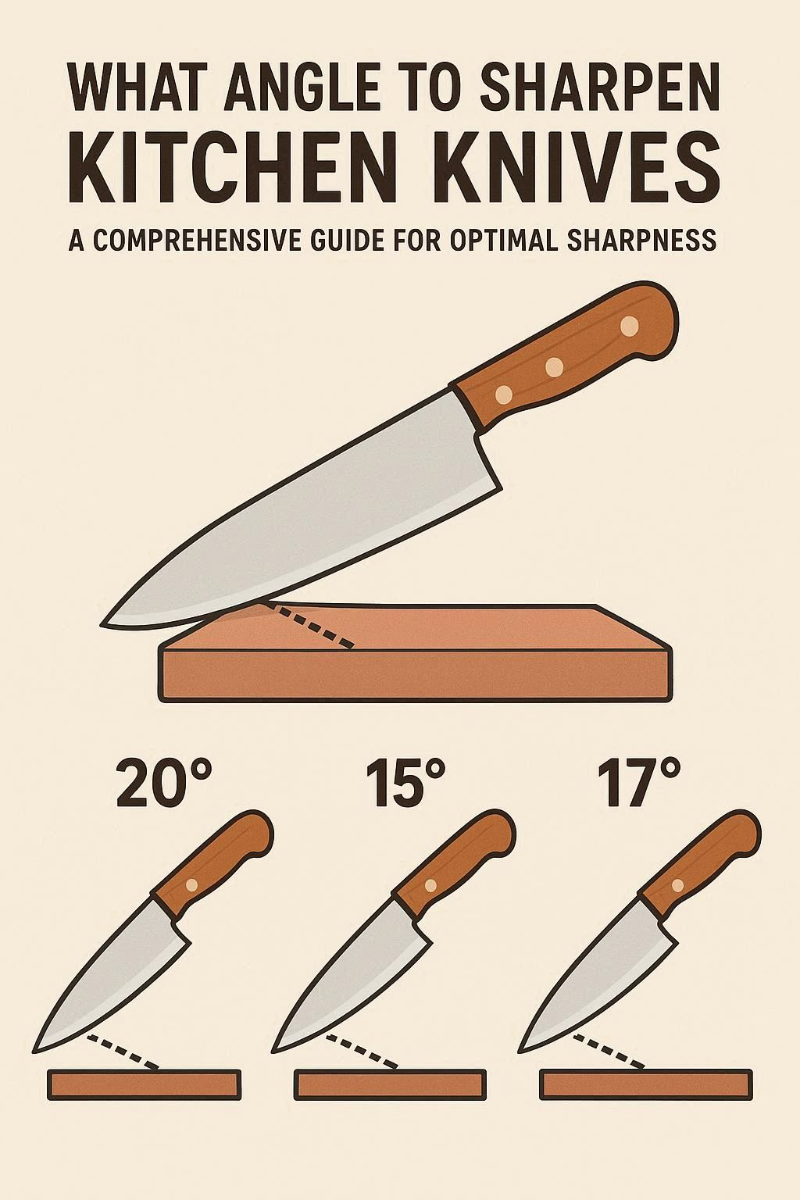
- 15° Angle: Commonly used for precision knives like paring knives and Japanese knives. This angle creates a very sharp edge, but it’s not as durable as a steeper angle.
- 20° Angle: This is the standard angle for most Western-style kitchen knives, including chef’s knives. It provides a balance between sharpness and durability.
- 25° Angle: Ideal for heavy-duty knives, such as cleavers or butcher knives, which need a more robust edge to handle tough cutting tasks.
The sharper the angle, the finer the edge. However, finer edges tend to be less durable. Therefore, the angle you choose depends on how you plan to use your knife.
Thin vs. Thick Edges: How They Relate to Angles
A thinner edge, sharpened at a lower angle, is great for cutting delicate foods with precision, but it’s more prone to damage when cutting through tough ingredients. A thicker edge, created by a steeper sharpening angle, is more durable and ideal for heavy-duty tasks like chopping meat or bone.
Choosing the right edge thickness for the task at hand is essential for both performance and blade longevity.
Best Sharpening Angles for Different Kitchen Knives
Now that you understand the basics of sharpening angles, let’s dive into the recommended angles for specific kitchen knives.
Chef’s Knives and Santoku Knives
- Recommended Angle: 15° to 20°
- Why It Works: These versatile, all-purpose knives need to be sharp enough for various tasks—slicing, chopping, dicing—and they also need to be durable. A 15° to 20° angle strikes the right balance, offering a sharp edge without sacrificing too much durability.
Paring Knives and Utility Knives
- Recommended Angle: 12° to 15°
- Why It Works: These smaller knives are perfect for delicate tasks like peeling, trimming, and intricate slicing. A finer edge at a lower angle is necessary for precision, making them sharp enough for intricate work while still maintaining a reasonable level of strength.
Knives for Meat and Bone Cutting (e.g., Cleavers, Butcher Knives)
- Recommended Angle: 20° to 25°
- Why It Works: For knives designed to cut through tough meat or bone, a more robust edge is needed. A 20° to 25° angle ensures the knife can withstand the pressure and force needed for these tasks without becoming damaged.
Japanese Knives (e.g., Gyuto, Nakiri)
- Recommended Angle: 12° to 15°
- Why It Works: Japanese knives are typically made from harder steel and are known for their thin, sharp edges. A 12° to 15° angle is ideal for achieving the precise, clean cuts that Japanese knives are famous for. These angles also reflect the traditional methods used in Japan to create ultra-sharp knives.
Serrated Knives
- Sharpening Serrated Knives: Serrated knives don’t require sharpening in the same way as straight-edged knives. Instead of maintaining a specific angle, serrated knives often only need occasional sharpening of the tips of the teeth.
- When to Replace: Serrated knives should be replaced when the teeth are too worn down to sharpen effectively, typically after years of use.
Tools for Sharpening Kitchen Knives at Home
Sharpening your knives at home can be done using a variety of tools, depending on your preference and experience. Let’s look at the most common sharpening tools available.
Sharpening Stones (Whetstones)
- Pros and Cons: Whetstones are ideal for achieving a precise edge at the desired angle. They offer full control but require some practice to use effectively. You’ll need to soak the stone and maintain the correct angle throughout the sharpening process.
- How to Use: To sharpen with a whetstone, hold your knife at the desired angle (e.g., 20° for a chef’s knife) and move it along the stone in smooth, consistent strokes. It’s important to maintain the same angle and pressure for an even edge.
Knife Sharpening Systems
- Overview: These systems come in manual or electric options, offering convenience and consistency. They typically come with guides that ensure you maintain the correct angle while sharpening.
- How These Systems Help: Sharpening systems are great for beginners or those who don’t want to invest in the skill required to use a whetstone. They take the guesswork out of maintaining the right angle.
Honing Rods
- Role of Honing Rods: A honing rod doesn’t sharpen the knife but realigns the edge. It’s perfect for maintaining sharpness between full sharpenings.
- How to Use: Hold the honing rod at a 20° angle to the knife and draw the blade down the rod, alternating sides, to keep the edge aligned.
How to Sharpen Kitchen Knives at Home
Sharpening your kitchen knives at home doesn’t have to be intimidating. Here’s a step-by-step guide on how to do it properly.
Step-by-Step Guide to Sharpening with a Whetstone
- Soak the Whetstone: Soak your whetstone in water for 10 to 15 minutes before use.
- Set the Angle: Hold the knife at the correct angle (e.g., 20° for a chef’s knife) and place the edge against the stone.
- Sharpen the Knife: With gentle pressure, slide the knife across the stone in a sweeping motion, working from the heel to the tip of the blade. Repeat on both sides of the blade.
- Check for Consistency: After a few passes, check the edge for uniformity and sharpness.
- Finish with a Polishing Stone (Optional): Use a finer grit stone to smooth out the edge for a polished, sharp finish.
Using a Sharpening System
- Set the Angle: Set your sharpening system to the desired angle for your knife.
- Insert the Knife: Place the knife into the guide of the sharpening system.
- Sharpen the Knife: Draw the knife through the sharpening slots according to the system’s instructions.
- Check Sharpness: After sharpening, check for sharpness and smoothness. Repeat as needed.
Tips for Maintaining a Sharp Edge
Once you’ve sharpened your knives, here are some tips to keep them in top condition.
Regular Honing
Regular honing ensures that your knife maintains a sharp edge between sharpenings. Use a honing rod to realign the blade after each use.
Proper Knife Storage
Store your knives in a knife block, magnetic strip, or protective sheath. Avoid storing them loosely in a drawer, as this can dull the edge and cause damage.
Avoiding Common Knife Sharpening Mistakes
Over-sharpening or using the wrong sharpening tools can damage your blade. Always use the right angle for the knife type and don’t overdo it.
Common Mistakes When Sharpening Knives and How to Avoid Them
Not Maintaining a Consistent Angle
A consistent angle is crucial for a sharp, even edge. Use a guide or sharpening system if you’re struggling to maintain the correct angle.
Using the Wrong Sharpening Tool
Make sure you’re using the appropriate tool for the job. For instance, use a whetstone for a fine edge or a sharpening system for convenience.
FAQ: Frequently Asked Questions
What’s the best angle to sharpen kitchen knives?
- The best angle depends on the type of knife. Generally, a 15° to 20° angle is ideal for most kitchen knives.
Can I use the same angle for all types of kitchen knives?
- No. Different knives require different angles. For example, paring knives may need a 12° to 15° angle, while meat cleavers may require a 20° to 25° angle.
How can I tell if my knife is sharp enough after sharpening?
- A sharp knife should slice through paper, vegetables, or meat effortlessly. You can also perform a “thumb test” by carefully running your finger along the edge (but not too closely).
Is it necessary to use a whetstone to sharpen my kitchen knives?
- Whetstones provide the most precision, but sharpening systems and rods can also work well, depending on your preference.
How often should I sharpen my kitchen knives?
- It depends on usage. Sharpen your knives every 3-6 months if used frequently. If they’re used less often, honing might suffice.
Can I ruin my knife by sharpening it incorrectly?
- Yes, sharpening at the wrong angle or using the wrong tool can damage the blade or create an uneven edge.
Conclusion
Sharpening your kitchen knives at the correct angle is essential for both performance and longevity. By selecting the appropriate angle for each knife and maintaining it consistently, you can ensure a sharp, efficient tool that lasts for years.
Experiment with the different angles based on your knives’ type and tasks, and remember, practice makes perfect! If you’re unsure or need expert guidance, consider consulting a professional knife sharpener.
Call to Action (CTA): Ready to give your knives the sharpness they deserve? Follow these tips, experiment with the right angle, and if you’re still unsure, consider consulting a professional knife sharpener for personalized advice!