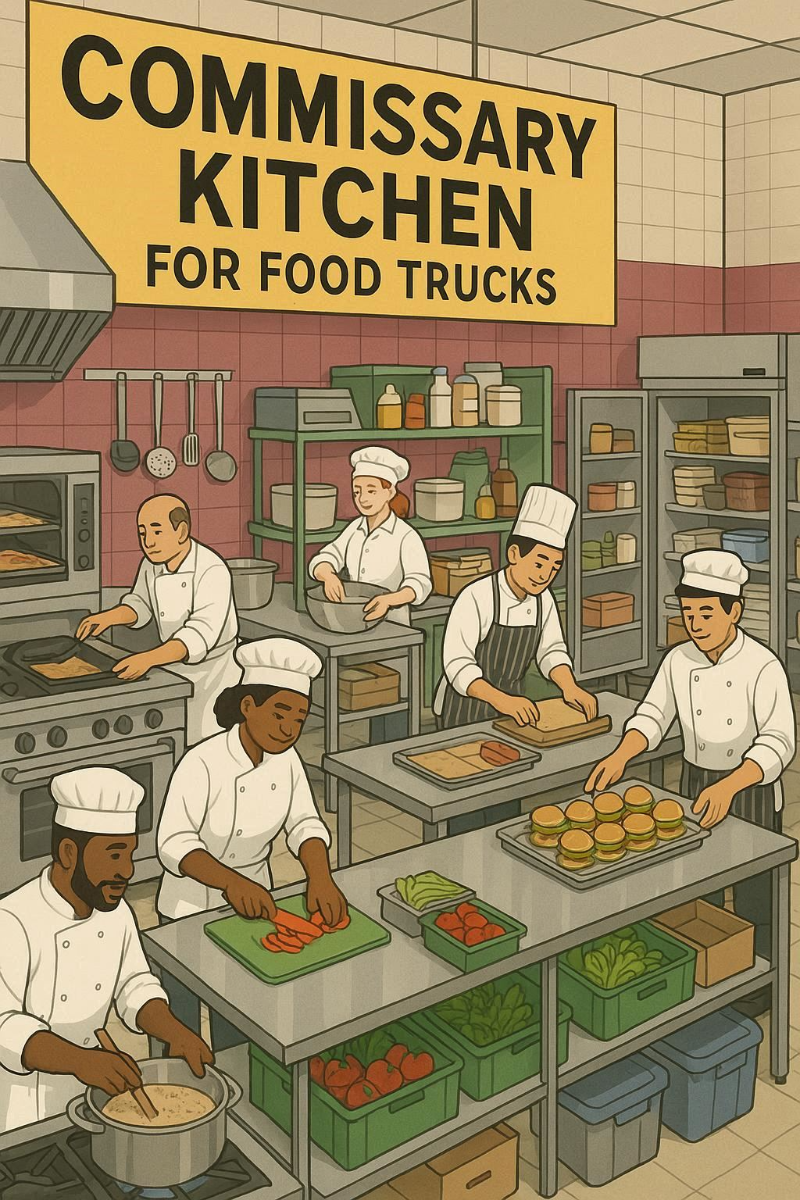
A commissary kitchen is a licensed, commercial kitchen where food trucks can prepare, store, and handle food. These kitchens are essential for meeting local health and safety regulations, and they provide food truck operators with a reliable space to prepare meals, store ingredients, and clean equipment.
For food truck owners, having access to a commissary kitchen helps ensure compliance with strict food safety codes, provides the necessary resources for food storage, and offers a central location for cleaning and organizing supplies.
Why Food Trucks Need a Commissary Kitchen
Most cities and municipalities require food trucks to operate out of a licensed, commercial kitchen to meet health department regulations. These regulations are designed to maintain food safety and sanitation standards, ensuring that food is prepared, stored, and transported safely. A commissary kitchen allows food truck operators to comply with these rules and avoid health code violations, which could lead to fines or even business closure.
In addition to compliance, commissary kitchens provide a secure and professional space for food truck owners to handle large Seasonal Kitchen Care volumes of food, store perishable items, and clean equipment that’s too large to fit in a mobile kitchen.
Benefits of Using a Commissary Kitchen for Food Trucks
Meeting Health and Safety Standards
Food safety is a top priority in any food service business, and commissary kitchens are specifically designed to help food trucks meet local regulations. These kitchens are fully equipped with the necessary resources to handle food safely, including refrigeration units, proper storage spaces, and sanitation stations.
For food truck operators, using a commissary kitchen ensures compliance with health department rules and reduces the risk of foodborne illness outbreaks. This is critical for maintaining a good reputation and avoiding costly legal issues.
Storage for Supplies and Equipment
One of the biggest challenges of running a food truck is storage. While your food truck itself can only carry so much inventory, a commissary kitchen provides extra space to store ingredients, utensils, cleaning equipment, and even larger appliances that can’t fit in your mobile unit. This storage space can help keep your truck organized and reduce clutter, improving operational efficiency.
Commissary kitchens typically offer secure, designated areas for refrigerated items, dry goods, and bulk supplies, making it easier to keep track of inventory and ensure you always have what you need.
Convenience and Cost-Efficiency
Operating a food truck can be expensive, and commissary kitchens offer a more cost-effective solution for many food truck owners. By using a shared kitchen space, you save on the costs of renting a full-time commercial kitchen. You also avoid the overhead costs of maintaining utilities, equipment, and insurance on your own.
Commissary kitchens allow food truck owners to focus on their business operations rather than dealing with day-to-day maintenance. Additionally, these kitchens can significantly reduce the time it takes to set up and break down your food truck daily, making it easier to streamline operations.
Shared Resources and Support
Many commissary kitchens offer more than just cooking space—they provide a range of shared resources that can benefit food truck owners. For example, you may have access to dishwashing stations, commercial-grade refrigerators, prep tables, and sometimes even catering equipment for bulk orders. Some kitchens even offer catering services, which could be useful for food trucks catering large events.
Having access to these shared resources helps reduce the need for investing in costly equipment and ensures that you have what you need when you need it.
Commissary Kitchen Services for Food Trucks
Full-Service vs. Limited-Service Commissary Kitchens
Commissary kitchens come in two primary types: full-service and limited-service.
- Full-Service Commissary Kitchens: These provide everything you need to prepare and store food. They typically include cooking areas, refrigeration, dishwashing stations, and more.
- Limited-Service Commissary Kitchens: These are more basic facilities that offer primarily storage and preparation space. They may not have cooking equipment on-site but are ideal for food trucks that do most of their cooking on the road.
Choosing the right type depends on your food truck’s needs, so be sure to understand which type of kitchen best fits your operation.
Features of a Commissary Kitchen for Food Trucks
When searching for the perfect commissary kitchen, look for a kitchen that offers essential features such as:
- Refrigeration: Adequate storage for perishable goods is crucial for food safety.
- Dry Storage: For storing dry goods and non-perishable ingredients.
- Grease Disposal: Many commissary kitchens offer grease disposal services to help manage waste.
- Dishwashing Facilities: Cleanliness is key in a commercial kitchen, so access to dishwashing stations is essential.
- Preparation Areas: A clean, organized space to prep ingredients before cooking.
Catering and Food Prep Services
Some commissary kitchens go beyond offering just storage and cooking space. Many provide additional services like food prep assistance, where ingredients can be prepped in bulk and ready for use by food trucks. This is an efficient way to save time and ensure consistency across food truck operations.
How to Find the Right Commissary Kitchen for Your Food Truck
Location Considerations
When choosing a commissary kitchen, consider its location carefully. The kitchen should be close to your food truck’s operating locations, reducing travel time and fuel costs. Also, ease of access is crucial for stocking up on supplies and transporting food from the kitchen to the truck.
Cost and Payment Structure
Commissary kitchens typically charge based on hourly rates, monthly fees, or per-use costs. It’s important to understand the pricing model and evaluate it based on your food truck’s budget. For example, if your food truck operates every day, a monthly fee might be more cost-effective than hourly charges.
Available Equipment and Facilities
Check what equipment is available at the commissary kitchen. Does it have enough storage space? Does it offer the specific tools and equipment your food truck needs? You’ll also want to know whether Wi-Fi, office space, and other amenities are provided, as these can make running your business more convenient.
Licensing and Health Compliance
Ensure that the commissary kitchen is fully licensed and compliant with local health and safety regulations. An accredited kitchen ensures that your food truck can legally operate without running into legal issues related to food safety or inspections.
The Process of Using a Commissary Kitchen for a Food Truck
Sign-Up and Agreement Process
Once you find a commissary kitchen that meets your needs, you’ll need to sign an agreement outlining the terms of service, payment structure, and usage policies. This will typically involve some paperwork and possibly an inspection of your food truck to ensure it complies with health codes.
Scheduling and Accessing the Kitchen
Most commissary kitchens operate on a first-come, first-served basis or by scheduled times. Be sure to understand how scheduling works, especially during peak hours, and plan accordingly. Some kitchens may require advance reservations.
Storing and Transporting Food Supplies
Once your food truck is signed up, you’ll need to organize how to store your supplies at the commissary kitchen and how to transport them to your food truck. Make sure your storage needs are met, whether for dry goods, refrigerated items, or larger equipment.
Cleaning and Maintenance Responsibilities
Food truck operators are often responsible for cleaning their own workstations and equipment. This includes making sure your food truck is clean and that the commissary kitchen’s facilities are left in good condition after each use.
Commissary Kitchen vs. Food Truck Kitchen
Key Differences Between Commissary and On-Site Kitchen
Unlike a food truck kitchen, which is mobile and can only hold limited supplies and equipment, a commissary kitchen is a fixed, commercial space with all the necessary resources for food preparation, storage, and cleaning. A commissary kitchen is where your food truck stores its ingredients, prepares large batches, and complies with local health regulations.
Why Food Trucks Can’t Operate Without a Commissary
Health code regulations often require food trucks to operate out of a licensed commercial kitchen, which is typically provided by a commissary. Without a commissary kitchen, a food truck would face severe legal and logistical challenges, including not having enough storage space and not meeting local health standards.
How Commissary Kitchens Can Streamline Food Truck Operations
Time Efficiency for Food Trucks
Using a commissary kitchen can significantly reduce the time it takes to set up and break down your food truck daily. With proper storage, prep areas, and dishwashing facilities available, food trucks can streamline operations, saving both time and energy.
Improved Food Safety and Quality
Commissary kitchens help food truck owners adhere to health and safety standards, which in turn ensures that customers enjoy fresh, safe meals every time. Proper storage and food handling reduce the risk of foodborne illness.
Simplified Inventory Management
A commissary kitchen allows food truck operators to stockpile ingredients and manage inventory in a more organized and efficient manner. By having a secure space for storage, food trucks can better track inventory levels and reduce waste.
Key Challenges of Using a Commissary Kitchen for Food Trucks
Scheduling Conflicts and Limited Access
Because commissary kitchens are shared spaces, scheduling conflicts may arise, especially during peak hours. Be prepared to plan ahead and reserve space early to avoid clashes with other food truck owners.
Extra Costs of Commissary Kitchen Services
While commissary kitchens offer cost-efficiency, additional costs can add up, especially if you frequently need to book space or use special services. It’s important to budget carefully to avoid overspending.
Finding a Suitable Commissary Kitchen
In dense urban areas, finding the right commissary kitchen can be challenging. Availability may be limited, and the cost of rental space could be higher. Research your options carefully to find the best fit for your food truck.
FAQ: Frequently Asked Questions
- What exactly is a commissary kitchen for food trucks?
- A commissary kitchen is a licensed, commercial kitchen where food trucks can prepare, store, and handle food while meeting health and safety regulations.
- Do I need a commissary kitchen to operate a food truck?
- Yes, most local regulations require food trucks to use a commissary kitchen to comply with health codes, store supplies, and prepare food.
- How much does it cost to use a commissary kitchen?
- Costs vary depending on location and services provided. Fees can range from $10 to $50 per hour or a monthly subscription model.
- Can food trucks use their own kitchen instead of a commissary?
- In most cases, no. A food truck must operate out of a licensed kitchen, which a commissary kitchen provides to meet local health regulations.
- How do food trucks store their ingredients in a commissary kitchen?
- Food trucks typically rent space in a commissary kitchen’s refrigeration or dry storage areas to store ingredients and supplies until they are needed.
- What are the benefits of using a commissary kitchen for food trucks?
- Commissary kitchens provide food trucks with a licensed, safe space to store ingredients, prepare food, and ensure compliance with health regulations.
- Can I access the commissary kitchen 24/7?
- Access hours depend on the kitchen’s policies. Many commissary kitchens offer flexible hours, but availability may be limited during peak times or by reservation.
Conclusion
Commissary kitchens play a crucial role in helping food trucks operate smoothly and stay compliant with health and safety regulations. By providing storage, preparation space, and resources, they enable food truck owners to focus on serving customers while ensuring quality and efficiency.
Food truck owners should carefully evaluate their needs when selecting a commissary kitchen, considering location, cost, facilities, and health compliance. With the right commissary kitchen, food truck operations can thrive and grow.
Call to Action (CTA): Ready to take your food truck to the next level? Find the perfect commissary kitchen and streamline your operations today!